Six Weeks in Europe: What the Schengen Clock Forced Me to Learn
I planned six weeks without realising the 90-day rule counts across the whole area combined, which changed my route entirely.
Departures Diary Editorial
August 15, 2026 · 3 min read
Key takeaways
- Non-EU visitors get 90 days in any rolling 180-day period across the entire Schengen area combined.
- Weeks 1–2, Schengen: Slovenia and Croatia.
- Six weeks came to roughly €2,600 excluding flights, which is less than three weeks of the same trip done at Western European prices and at three nights a stop.
I booked six weeks in Europe and started building an itinerary that would have taken me through nine Schengen countries. Then someone in a hostel in Ljubljana explained the 90-day rule properly and I rebuilt the whole thing.
The rule I had misunderstood
I thought the 90 days applied per country. It does not.
Non-EU visitors get 90 days in any rolling 180-day period across the entire Schengen area combined. France, Germany, Italy, Spain, Greece, the Netherlands and most of the rest count as one pool.
Two further things I had wrong: it is a rolling window rather than a calendar one, so days from a trip four months earlier still count against you. And it is enforced with fines and potential entry bans rather than a shrug.
Six weeks was not a problem on its own. But I had been to Europe for three weeks earlier that year, and I was planning to come back in the autumn. Suddenly the arithmetic mattered.
The countries that pause the clock
This is the useful part. Several European countries sit outside Schengen entirely:
Albania, Bosnia and Herzegovina, Serbia, Montenegro, North Macedonia, Moldova, plus the UK and Ireland.
Time spent in any of them does not consume the allowance.
And several of them — Albania, Bosnia, North Macedonia — are among the cheapest countries in Europe. So a Balkan stretch both pauses the clock and lowers the daily spend, which is an unusually clean overlap of two different constraints.
The route I actually did
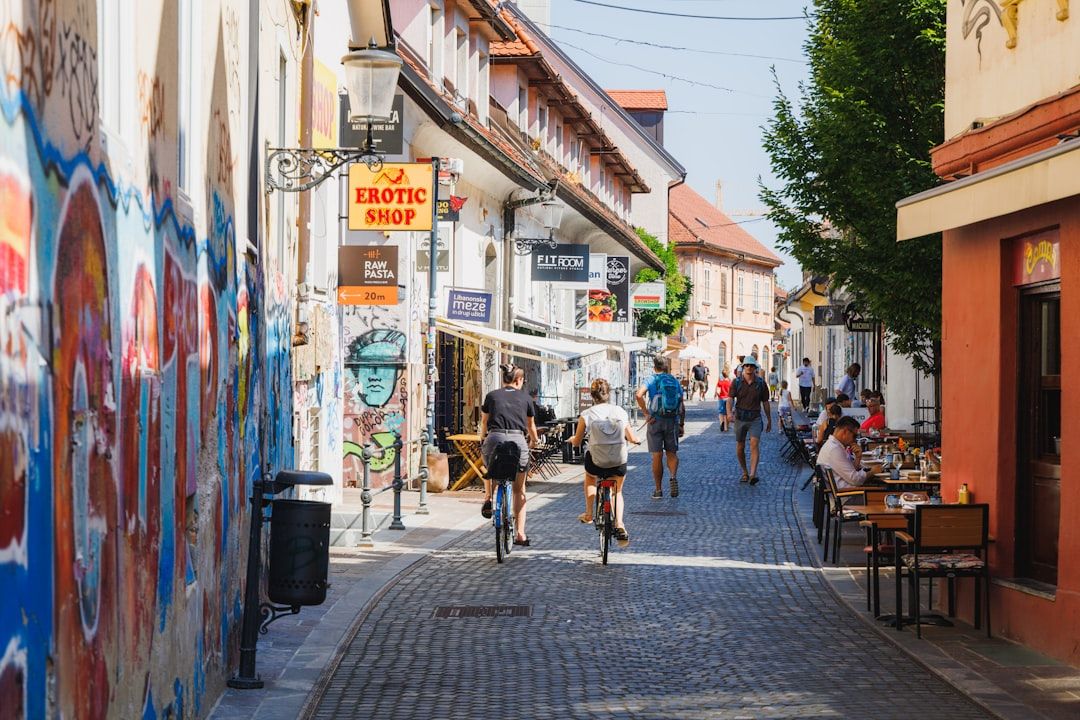
Weeks 1–2, Schengen: Slovenia and Croatia. Ljubljana, Lake Bled, the Julian Alps, then down the Dalmatian coast.
Weeks 3–4, outside Schengen: Bosnia, Montenegro, Albania. Sarajevo, Mostar, the Bay of Kotor, Tirana, Berat. Clock paused.
Weeks 5–6, Schengen: Greece — Thessaloniki, Meteora, and two Aegean islands.
Four weeks of Schengen used rather than six, leaving enough for an autumn trip. And the middle two weeks cost roughly half what the others did.
The pace lesson
The other thing six weeks taught me is that I had been travelling too fast for years.
I started with two or three nights per place out of habit. By week three I was tired in a way that had nothing to do with distance, and I stopped for six nights in Berat because I could not face another bus.
Those six days were the best of the trip. I found a bakery, learned the walk up to the castle, ate at the same place three times, and had actual conversations rather than transactions.
After that I did a week per place. It cost less — weekly rates on apartments ran well below nightly, and having a kitchen changed the food budget entirely — and I remember those weeks in detail while the early fortnight is a blur.
What it cost
| Region | Daily average |
|---|---|
| Slovenia / Croatia coast | €65–80 |
| Bosnia / Montenegro / Albania | €35–50 |
| Greece mainland | €55–70 |
| Greek islands | €70–90 |
Six weeks came to roughly €2,600 excluding flights, which is less than three weeks of the same trip done at Western European prices and at three nights a stop.
The two things worth knowing before a long European trip
Count your Schengen days across the rolling 180, including previous trips. And plan fewer stops than feels natural — the constraint that actually bites on a long trip is energy, not time or money.
Frequently asked questions
How does the Schengen 90-day rule work?
Non-EU visitors may spend 90 days in any rolling 180-day period within the Schengen area, counted across all member countries combined rather than per country. It is a rolling window rather than a calendar one, so days from earlier trips still count. Overstaying carries fines and potential entry bans.
Which European countries are outside Schengen?
Albania, Bosnia and Herzegovina, Serbia, Montenegro, North Macedonia, Moldova, the United Kingdom and Ireland all sit outside the Schengen area, so time spent there does not consume the 90-day allowance. Several of them are also among the cheapest countries in Europe, which makes a Balkan-weighted route doubly advantageous on a long trip.
How do you plan a long trip around Schengen limits?
Alternate Schengen and non-Schengen time rather than using the allowance in one continuous block. A common pattern is several weeks in Schengen countries, then a stretch through the Balkans or the UK, which pauses the clock and lets the rolling window recover before returning.
Does a slower pace save money on a long European trip?
Substantially. Every relocation costs a fare, roughly half a day and usually a station meal, and weekly accommodation rates commonly run 15 to 25 percent below the nightly equivalent. Staying a week per place rather than two nights halves the number of moves and makes self-catering practical.
Departures Diary Editorial
Travel stories from 40+ countries
Travel writers documenting slow journeys and dispatches from the road with first-person narratives.